If you are thinking about moving to Greenwood Village, you probably want to know one simple thing first: what does daily life actually feel like there? This is one of those places that can be hard to sum up from a quick map search because it blends business districts, residential areas, parks, trails, and transit in a way that feels different from a traditional small downtown suburb. In this guide, you will get a practical look at housing, commuting, outdoor life, dining, and what new residents should expect before making a move. Let’s dive in.
Greenwood Village at a Glance
Greenwood Village is in Arapahoe County just south of Denver and covers about 8.3 square miles, according to the city’s About Us page. The city reported 15,691 residents in the 2020 Census, along with a much larger daytime business population of about 38,500 people.
That helps explain why Greenwood Village feels distinct. It is not built around one old-town core. Instead, it functions more like a south metro live-work area with residential neighborhoods, office hubs, retail, restaurants, and open space all woven together.
What Greenwood Village Feels Like
The simplest way to describe Greenwood Village is this: it feels both suburban and connected. The city itself describes Greenwood Village as a blend of urban and residential areas, and that matches what many new residents notice right away.
You will find major employment centers, access to light rail, and restaurant clusters near business corridors. At the same time, you also get large parks, trail access, open space, and a range of housing types that create a more residential day-to-day experience.
For many buyers and relocators, that balance is a big draw. If you want easier access to Denver and the Denver Tech Center without giving up parks and quieter residential pockets, Greenwood Village often stands out.
Commuting and Getting Around
Transportation is one of Greenwood Village’s biggest lifestyle advantages. The city says I-25 runs through Greenwood Village and I-225 sits just outside its boundaries, which gives you strong regional access for commuting across the south metro area and beyond.
Transit is also part of the picture. Greenwood Village has three light rail stations, and RTD’s Arapahoe at Village Center Station serves multiple bus routes plus the E and R rail lines, while Orchard Station also serves the E and R lines. If you are trying to reduce your dependence on driving every day, that can make a real difference.
The city also notes that Denver International Airport is about 35 minutes northeast and Centennial Airport is about 10 minutes east. Census QuickFacts reports a mean travel time to work of 19.9 minutes, which adds helpful context for anyone comparing commute patterns in the south metro market.
Parks and Trails Shape Daily Life
One thing that surprises many people about Greenwood Village is how strong its outdoor lifestyle is. The city’s Parks, Trails & Open Space page says Greenwood Village has roughly 40 to 47 miles of trails and paths, depending on the source and counting method, plus access to two major regional trail systems.
Those two trail systems are the High Line Canal Trail on the west side and the Cherry Creek Trail on the east side. That means your routine can easily include walking, running, biking, or simply getting outside without needing a major weekend plan.
The city also notes that the trail system supports horseback riding in addition to biking, walking, and running. That is a unique part of Greenwood Village’s identity and one reason the city feels different from many other business-heavy suburban areas.
Standout Parks to Know
Several parks help define the local lifestyle:
- Westlands Park is a 28-acre park with three play areas, climbing structures, fields, pickleball courts, a basketball court, a pond, and an interactive water feature.
- Silo Park includes a renovated playground, shelter, grills, demonstration gardens, a small amphitheater, and a natural trail with interpretive wetland information.
- Village Greens Park is the city’s largest park at 25.12 acres and includes multi-use fields, ball fields, picnic areas, and trail connections.
- Village Greens Park North adds a 1.2-mile loop walking and biking trail with links to the Cherry Creek Trail and the Dayton Street Light Rail Station.
- Marjorie Perry Nature Preserve offers 59 acres of open space along the High Line Canal with natural vegetation and wildlife habitat.
If outdoor access matters to you, Greenwood Village offers more than a few pocket parks. It has a real trail-and-open-space framework that can shape your everyday routine.
Dining, Entertainment, and Arts
Greenwood Village does not center around a single traditional downtown district. Instead, dining and evening activity tend to cluster around business corridors and entertainment nodes.
The city says Greenwood Village includes part of the Denver Tech Center, Greenwood Plaza, the Village Center, and other business developments with numerous retail and restaurant establishments. The mayor also notes ongoing work in the Greenwood Entertainment District, especially along Arapahoe Road west of I-25, which points to where much of the city’s restaurant and nightlife energy is concentrated.
This setup can be convenient if you like having dinner spots, entertainment, and services close to major roads and transit. It creates more of a corridor-based lifestyle than a central main-street experience.
A Cultural Side You Might Not Expect
Greenwood Village also has a meaningful arts component. The Curtis Center for the Arts offers arts instruction, rotating visual art exhibits, lectures, and cultural events, and the city says exhibits and receptions are free to attend.
That gives residents another option beyond parks and restaurants. If you want a place with both outdoor recreation and community arts programming, Greenwood Village checks both boxes.
Housing Options in Greenwood Village
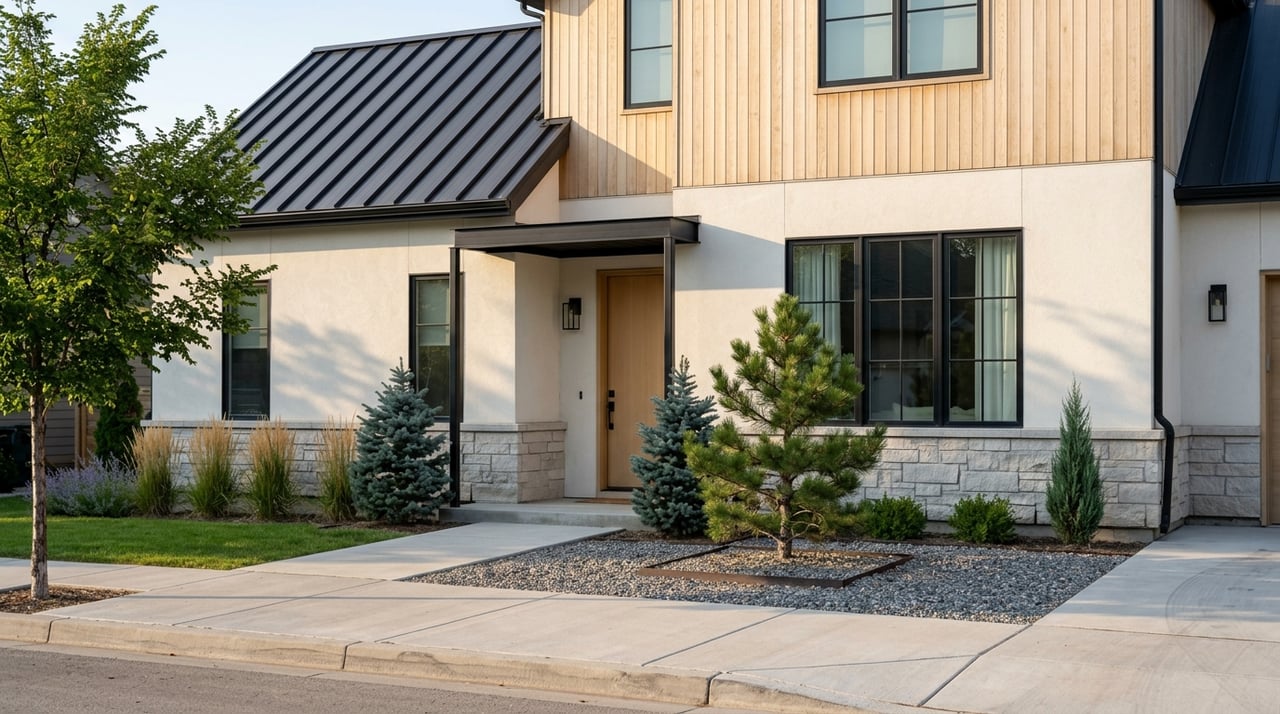
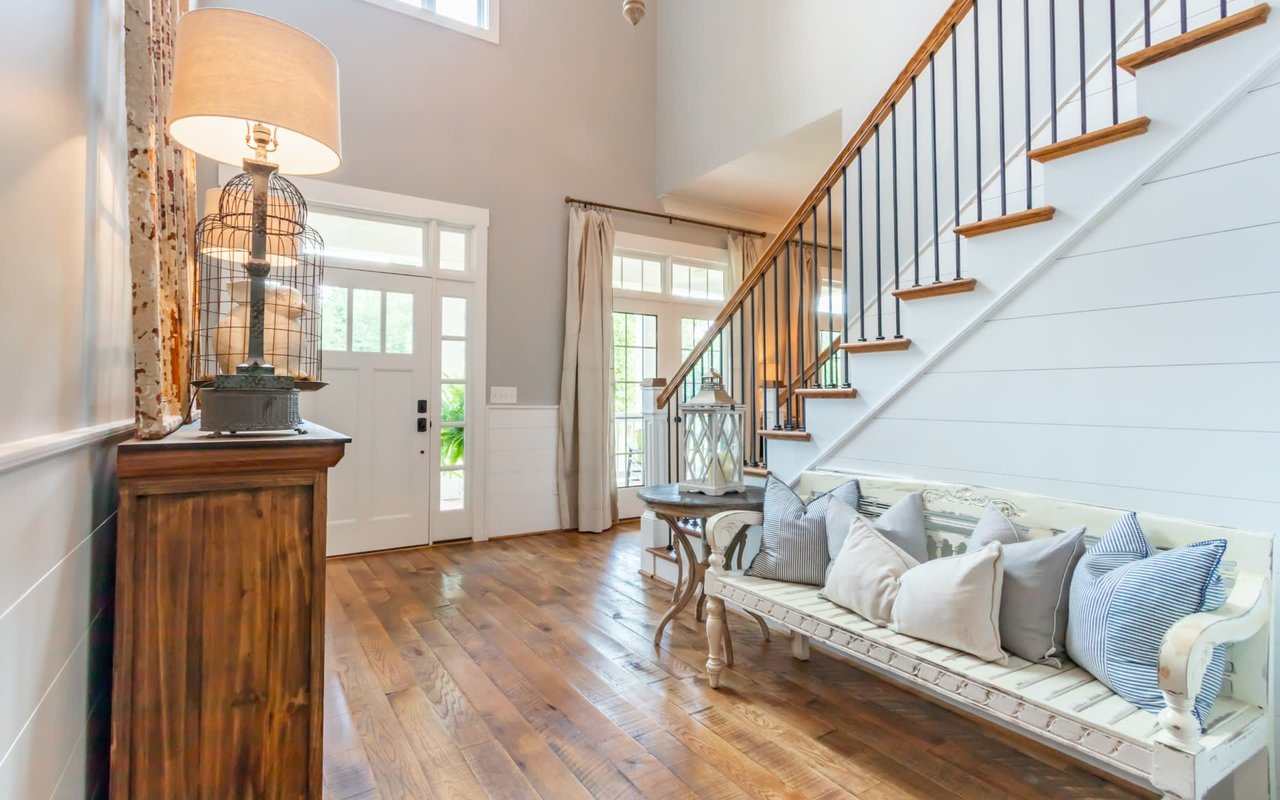
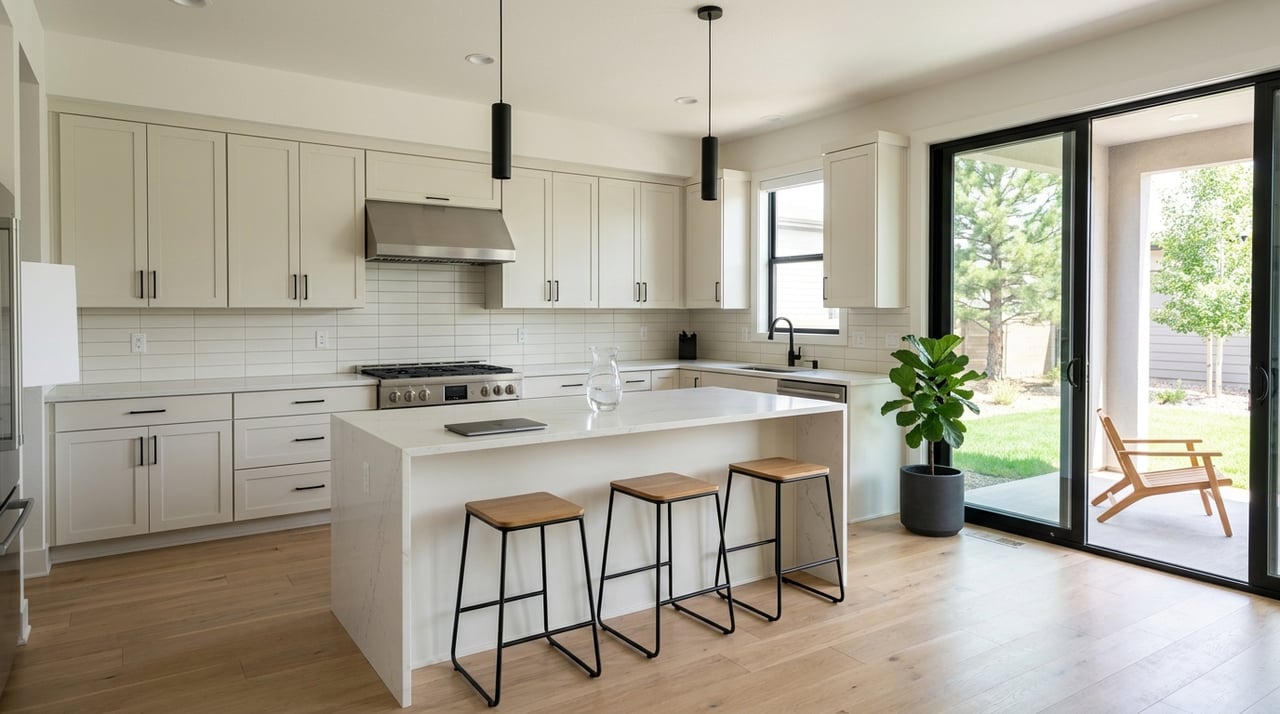
A common misconception is that Greenwood Village is only about large estate-style homes. While detached single-family homes do make up most of the housing stock, the city’s own data shows a broader mix.
According to the city’s 2026 budget, Greenwood Village has about 6,900 housing units and includes urban lofts, condominiums, single-family homes, and multi-acre estates. The same source says about 64% of units are owner-occupied and 36% are renter-occupied.
Earlier city planning data also supports that range, with a substantial multifamily presence alongside single-family homes. In practical terms, that means buyers may find more variety here than they expect, especially if they assume the city is limited to high-end detached homes.
What New Residents Should Expect on Price
Greenwood Village is generally a higher-price market. Census QuickFacts reports a median owner-occupied home value of $1,237,800, while the city’s budget document lists a median gross rent of $2,123.
That does not mean every property looks the same or fits the same buyer profile. It does mean you should go in with a clear budget, strong financing strategy, and realistic expectations about what different housing types offer at different price points.
Housing Is Still Evolving
Another useful thing to know is that Greenwood Village is not frozen in time. The mayor’s message references newer brownstone homes near I-25 and Orchard and approved townhomes south of The Landmark, showing that the housing mix continues to evolve near business and transit corridors.
That is important if you want a lower-maintenance lifestyle or a more lock-and-leave option. Greenwood Village’s housing choices now extend beyond the classic image many people have of the area.
Why Greenwood Village Works for Relocators
For many new residents, Greenwood Village works because it solves several needs at once. You can be close to major employers, highways, and rail service while still having strong access to parks, trails, and open space.
It can also appeal to different types of buyers. Some people move here for commute efficiency. Others prioritize the outdoor network, the housing mix, or the balance between residential living and business access.
If you work remotely or hybrid, another detail worth noting is broadband infrastructure. The mayor says the citywide fiber-to-the-premise project launched in 2023 and is being rolled out to households and businesses, which may be especially relevant if dependable high-speed connectivity matters to your day-to-day routine.
Things to Consider Before You Move
Before choosing Greenwood Village, it helps to think about how you want to live, not just where you want to be on a map.
Ask yourself:
- Do you want quick access to I-25, DTC, and light rail?
- Would nearby trails and parks improve your daily routine?
- Are you looking for a detached home, condo, townhome, or something lower maintenance?
- Do you prefer a corridor-based dining and entertainment setup over a traditional downtown feel?
- Does a higher-price market still make sense for your goals and budget?
If your answers lean toward convenience, connectivity, and a polished south metro lifestyle with strong outdoor access, Greenwood Village may be a very strong fit.
Final Thoughts on Living Here
Greenwood Village offers a lifestyle that is more layered than many people expect. It combines business access, transit, housing variety, open space, and recreation in a way that feels practical for everyday living.
For some buyers, the biggest surprise is how much outdoor access and housing diversity the city actually has. For others, it is the convenience of living near major employment centers without feeling boxed into a purely urban setting.
If you are considering a move and want help comparing homes, weighing commute patterns, or understanding which part of Greenwood Village best fits your goals, Jonathon Sakalas can help you make a smart, informed move.
FAQs
What is daily life like in Greenwood Village for new residents?
- Greenwood Village feels like a blend of residential areas, business districts, parks, trails, and transit access rather than a traditional suburb built around one downtown core.
Is Greenwood Village mostly single-family housing?
- No. Detached single-family homes make up much of the housing stock, but the city also includes condos, lofts, townhomes, brownstones, multifamily housing, and multi-acre estates.
Is commuting from Greenwood Village practical?
- Yes. Greenwood Village offers access to I-25, nearby I-225, three light rail stations, RTD connections, and a reported mean travel time to work of 19.9 minutes.
What outdoor amenities does Greenwood Village offer residents?
- The city offers roughly 40 to 47 miles of trails and paths, access to the High Line Canal Trail and Cherry Creek Trail, major parks, open space, and recreation options that include walking, biking, running, and horseback riding.
Does Greenwood Village have dining and entertainment areas?
- Yes. Dining and evening activity are generally centered around business corridors and entertainment nodes, especially near the Denver Tech Center, Landmark area, and the Greenwood Entertainment District.
Is Greenwood Village a good fit for remote or hybrid workers?
- It can be, especially because of its transportation access, business proximity, parks and trails, and the city’s ongoing fiber-to-the-premise rollout for households and businesses.