If your Highlands Ranch home feels a little tight or a little dated, you are not alone. A lot of homeowners are asking the same question right now: should you move up to a bigger home, or stay put and improve what you already have? The answer depends less on headlines and more on your monthly payment, your equity, and the problem you are actually trying to solve. Let’s break it down.
What the Highlands Ranch market looks like now
Highlands Ranch remains a high-value market, but it is not showing the kind of rapid price growth that automatically makes moving the obvious choice. As of May 31, 2026, Zillow reported a typical home value of $711,007, a median sale price of $690,000, and about 367 homes on the market. Homes were going pending in roughly 8 days.
That still sounds active, but prices have softened from a year ago. Zillow showed values down 3.1% year over year, and Redfin’s rolling three-month median sale price for the period ending May 2026 was $707,000, down 2.1% from the prior year. In plain terms, Highlands Ranch is still competitive, but it is not a market where you can assume your next move will be offset by fast appreciation.
Why mortgage rates matter so much
For many move-up buyers, the biggest issue is not the price tag alone. It is the monthly payment that comes with today’s financing costs. Freddie Mac reported the average 30-year fixed mortgage rate at 6.49% on July 9, 2026.
At that rate, every additional $200,000 borrowed adds about $1,262.82 per month in principal and interest alone. That does not include property taxes, insurance, utilities, or other ownership costs. So even if the next home is only one step up, the payment jump can feel a lot bigger than expected.
Start with the real question
Before you decide to move, it helps to name the problem clearly. Are you dealing with a true space problem, or do you mostly have a house problem?
A space problem usually means your current home cannot reasonably provide what you need, like more bedrooms, another bathroom, a larger garage, or a different lot or location. A house problem is more about function or style, such as an outdated kitchen, a choppy layout, or finishes that no longer fit your taste.
That distinction matters because the right financial answer often follows the real-life problem. If your home is simply not big enough or cannot be reworked in a practical way, moving may make sense. If the issues are mostly cosmetic or functional, staying put may preserve more of your equity.
What it costs to move up
A move-up decision has three cost layers:
- Selling your current home
- Buying the next home
- Carrying the new monthly payment
It is easy to focus only on the purchase price of the next house. In reality, the full cost of moving includes a lot more than that.
Upfront buying costs add up fast
Bankrate’s 2025 review estimated average Colorado purchase closing costs at $3,479, or about 0.59% of the average sale price. Those costs typically include lender fees, title services, appraisal charges, and transfer taxes.
Using that benchmark, a $900,000 move-up purchase would come with estimated closing costs of about $5,310. That is only a rough estimate, but it shows how quickly costs stack up before you even pay for movers, repairs, or new furniture.
The monthly jump is usually bigger than expected
This is where many homeowners pause. If you borrow even modestly more than you owe now, your payment can increase sharply because of the current rate environment.
For example, if your next purchase means borrowing $200,000 more, that adds about $1,263 per month in principal and interest. Once you layer in taxes, insurance, and local fees, the real monthly difference can be much higher.
Highlands Ranch ownership costs do not disappear
Whether you move up or stay put, Highlands Ranch has recurring local ownership costs you should keep in view. The HRCA 2026 assessment is $696 per year, billed at $174 per quarter.
The Highlands Ranch Metro District’s 2026 residential fixed fees include a $42.56 bi-monthly water service availability fee, a $3.48 bi-monthly stormwater fee, a $6.70 bi-monthly streetlight fee, and a $9.75 monthly infrastructure improvement fee. Together, those fixed district fees total $433.44 per year before usage-based charges.
Property taxes also matter. One recent Highlands Ranch tax account at 1176 Cherry Blossom Ct showed $3,352.46 in annual property tax on $512,594 of actual value. Using that as a rough illustration, a home around Zillow’s $711,007 typical value could imply about $4,650 per year in property tax, though actual bills vary by district and mill levy.
When you combine that rough tax estimate with the HRCA assessment and Metro District fixed fees, you get an ownership baseline of roughly $540 per month before insurance, maintenance, utilities, and any mortgage payment. That is important context when comparing a move with a remodel.
When staying put may make more sense
If your home basically works but needs updates, remodeling can be the smarter financial move. This is especially true when the alternative is taking on a much larger loan at today’s mortgage rates.
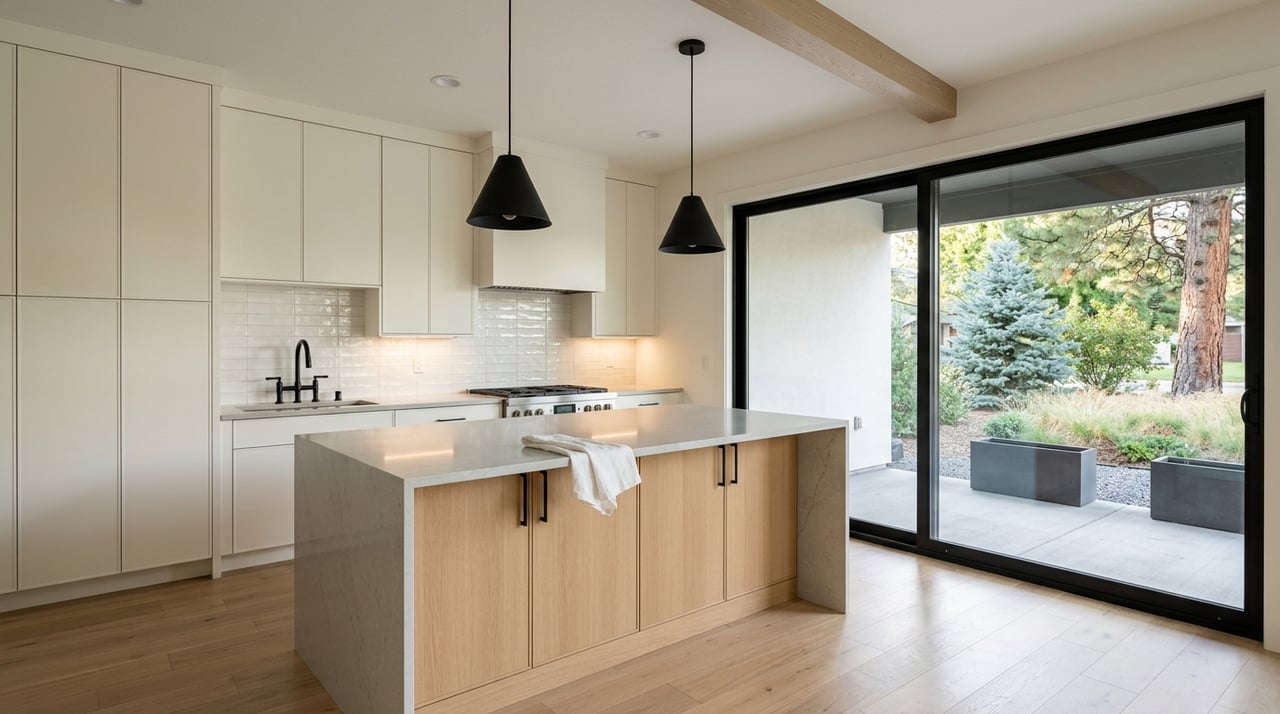
The best remodeling projects are often targeted, not massive. The 2025 Cost vs. Value report showed that a midrange minor kitchen remodel had an average job cost of $28,458 and an estimated resale value of $32,141. By contrast, a midrange major kitchen remodel cost $82,793 and recouped only 51%, while a midrange bathroom addition cost $60,645 and recouped 53%.
Bigger does not always mean better. An upscale primary suite addition had an average cost of $351,613 and recouped only 18%, which is a useful reminder that very large additions can be hard to justify on resale alone.
Remodeling has its own trade-offs
Staying put is not always simple. Remodeling brings its own costs, timeline issues, and disruption.
Douglas County states that electrical and plumbing contractors must be registered with the county before working there. General, mechanical, and roofing contractors must also be county licensed. If you plan to act as your own general contractor or do certain work yourself, the county notes that you need to understand inspections and code compliance.
Permit records in Highlands Ranch also show that kitchen remodels, basement alterations, interior remodels, and structural projects go through county inspection steps. So the real cost of remodeling is not just materials and labor. It is also scheduling, permitting, inspections, and living through the project.
A practical way to decide
If you are torn between moving up and staying put, it helps to compare the two choices side by side.
| Question | Move Up | Stay Put |
|---|---|---|
| Do you need more bedrooms, baths, or garage space? | Often the better fit | May not solve the problem |
| Is the issue mostly cosmetic or layout-related? | Could be more expensive than needed | Often the better fit |
| Will a larger mortgage strain your monthly budget? | Higher risk at current rates | Usually easier to control |
| Are you prepared for permits and construction disruption? | Avoids remodel chaos | Requires patience and planning |
| Are you trying to preserve equity? | Depends on sale proceeds and new payment | Often stronger with targeted updates |
In many cases, the decision comes down to this: if your house cannot reasonably become what you need, moving up may be the right choice. If your current home can work with focused improvements, staying put may cost less and keep your finances more flexible.
Run the numbers before you decide
This is one of those decisions where emotion and math need to work together. You may love the idea of more space, but you still need to compare the full cost of moving against the full cost of solving the problem in place.
A smart comparison should include:
- Your estimated sale proceeds after paying off your current mortgage
- Your likely down payment for the next home
- Buyer closing costs
- The added monthly principal and interest
- Property taxes, HRCA dues, and Metro District fees
- Moving expenses, repairs, and furniture needs
- A realistic remodel budget if you stay
Colorado ownership costs are already significant beyond the mortgage. Bankrate estimated the state’s average annual hidden homeownership costs at $25,766 in 2025, including property taxes, insurance, utilities, internet or cable, and maintenance. That makes it even more important to evaluate your true monthly and annual cost, not just the list price of the next house.
The best answer depends on your goals
There is no universal right answer in Highlands Ranch right now. The market is active, but softer pricing and higher borrowing costs mean a move-up decision deserves a close look.
If you need materially different space that remodeling cannot create, moving up may still be worth it. If your current home has good bones and the problems are mostly functional or cosmetic, staying put and making targeted improvements may be the stronger financial play.
The key is to look at the decision through both a lifestyle lens and a numbers lens. That is often where clarity shows up.
If you want help comparing your sale proceeds, likely payment change, and whether a remodel or move makes more sense for your situation, Jonathon Sakalas can help you run the numbers and build a plan that fits your goals.
FAQs
Should I move up in Highlands Ranch if home prices are slightly down?
- Maybe. With Highlands Ranch prices down modestly year over year, the better question is whether the new monthly payment, closing costs, and ongoing ownership costs still work for your budget.
How much more will a bigger Highlands Ranch mortgage cost per month?
- At a 6.49% 30-year fixed rate, borrowing an additional $200,000 adds about $1,262.82 per month in principal and interest alone.
What Highlands Ranch fees should homeowners remember before moving?
- You should account for property taxes, the 2026 HRCA assessment of $696 per year, Metro District fixed fees totaling $433.44 per year before usage-based charges, plus insurance, maintenance, and utilities.
When does remodeling make more sense than moving in Highlands Ranch?
- Remodeling often makes more sense when your home’s main issues are finishes, layout, or function rather than a true shortage of bedrooms, bathrooms, garage space, or lot size.
What remodel projects tend to offer better value for homeowners?
- Smaller, targeted updates tend to compare better than large additions. The 2025 Cost vs. Value report showed stronger results for a midrange minor kitchen remodel than for major kitchens, bathroom additions, or upscale suite additions.
What should Highlands Ranch homeowners know about Douglas County remodel rules?
- Douglas County requires certain contractors to be registered or licensed, and many remodels involve permits, inspections, and code compliance, which can affect cost, timing, and convenience.